
MASTA 16 Powertrain Design and Analysis Software Helps Engineers Explore More Designs, Faster
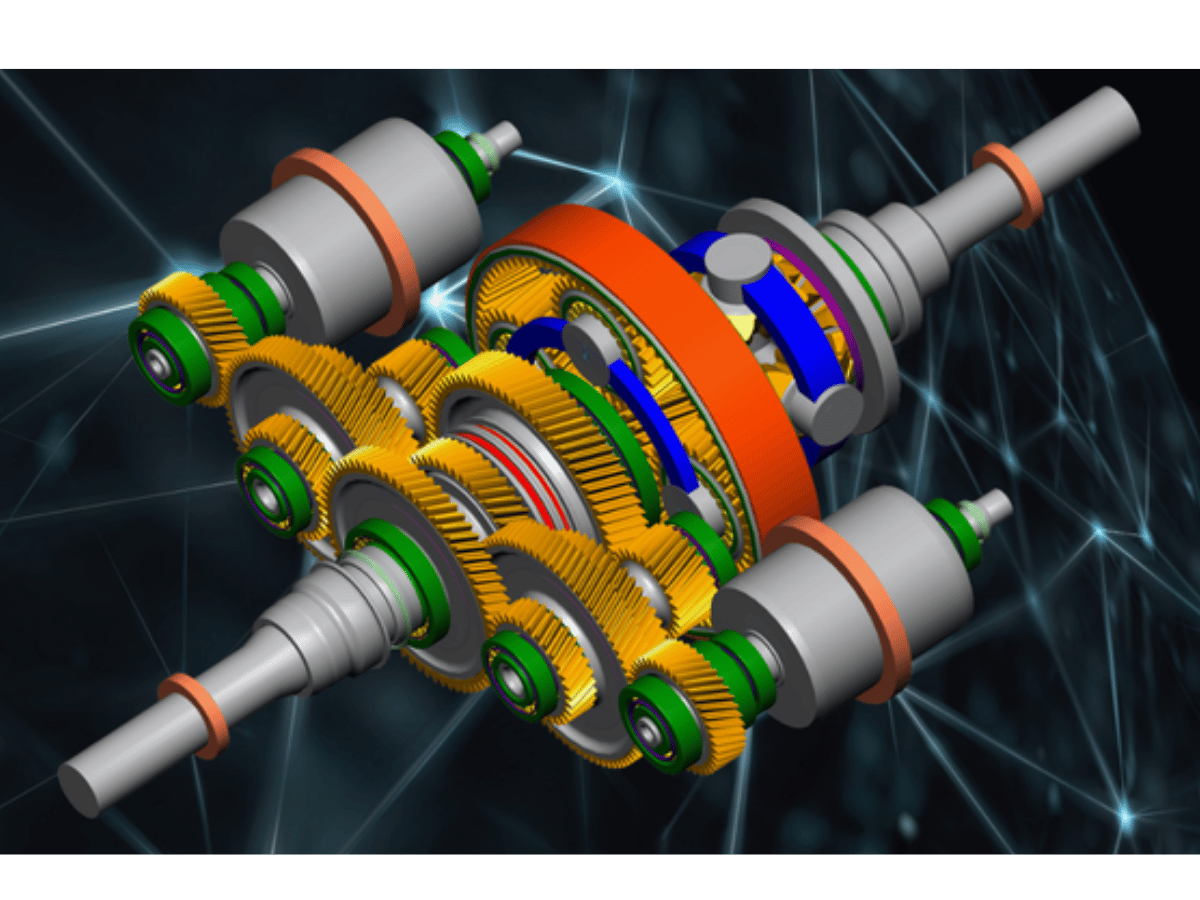
MASTA 16 is a single software solution for the design, analysis and optimisation of transmissions, electric machines and electrified powertrains, from concept through to manufacture.
New release combines AI, automation, HPC and higher-fidelity simulation to accelerate engineering decision-making
As engineering teams face increasing pressure to deliver quieter, lighter, more efficient and more reliable powertrain systems, MASTA 16 helps them move beyond isolated component analysis to more informed decisions based on complete system behaviour. MASTA 16 introduces a range of new technologies designed to reduce simulation bottlenecks, expand design exploration, improve prediction accuracy and support the growing complexity of electrified powertrains.
While high-fidelity simulations provide the accuracy needed to support design decisions, it can often be too computationally expensive to allow engineers to fully explore the breadth of possible solutions. MASTA 16 has been developed to specifically address this challenge by increasing the speed, scale and confidence of simulation-led engineering.
Pramod Mooneeramsing, CEO of SMT, said the release reflects changing expectations of simulation within modern engineering organisations.
“The challenge facing engineers today is about making confident design decisions early enough in the process to influence development outcomes. MASTA 16 is focused on helping engineers explore more design options faster, automate repetitive tasks, and increase confidence in results. The result is faster development cycles without compromising on engineering rigour.”
As powertrain systems evolve, particularly with the ongoing shift toward electrification, engineers are being required to make design decisions earlier in the development cycle, often with limited time to explore and validate multiple concepts.
Paul Langlois, CTO of SMT, added:
“Powertrain systems are becoming more integrated, more electrified and more interconnected. Engineers need tools that allow them to understand those interactions without sacrificing practicality. Increasingly, that means accurately representing how component flexibility, tooth contact and wider system dynamics interact, rather than analysing components independently”
Accelerating development through AI, automation and scalable computing
A major focus of MASTA 16 is enabling engineers to evaluate more design options in less time. New High Performance Computing (HPC) capabilities in MASTA 16 allow simulations to be distributed across multiple machines and remote compute environments - meaning larger studies, faster turnaround times and broader design explorations. The introduction of a new Command Line Interface (CLI) also supports easier integration with automated engineering workflows and existing development pipelines.
MASTA 16 further expands SMT's use of practical AI within engineering workflows by introducing significant enhancements to the Machine Learning Micro Geometry Optimiser, including AI-assisted contact patch evaluation, multi-objective Pareto optimisation and surrogate modelling technology that helps reduce optimisation runtimes dramatically while maintaining engineering relevance.
Rather than replacing engineering expertise, these capabilities are designed to help engineers explore more possibilities and focus their efforts on decision-making rather than repetitive simulation tasks.
In one customer evaluation of MASTA 16, machine-learning driven optimisation techniques reduced development time by approximately 90%, enabling engineers to reach equivalent design outcomes significantly faster.
MASTA 16 also introduces AI-assisted Acoustics Upscaling, which combines high-fidelity acoustic simulation with machine learning to identify critical NVH behaviours more efficiently. Importantly, results are presented alongside confidence bounds, giving engineers visibility into both predicted behaviour and associated uncertainty.
Increasing confidence through higher-fidelity simulation
As simulation is used earlier and earlier in the design process, confidence in results becomes increasingly important. MASTA 16 introduces several developments aimed at improving modelling fidelity while maintaining practical engineering workflows.
One of the most significant advances is the introduction of Flexible Gear Blank Advanced LTCA, which fully couples gear tooth contact, flexible gear body deflection and wider system interactions within a single calculation. Traditionally, these effects have often been simplified or analysed separately, making it difficult to fully capture how lightweight or thin-rimmed gears behave within an operating transmission.
By using a single finite element representation of both the gear blank and tooth contact, together with a Hertzian representation for local contact stiffness, MASTA 16 enables engineers to predict transmission error, load distribution and gear stresses with greater confidence, providing a more realistic representation of real-world operating behaviour, particularly in high-performance, lightweight and electrified powertrains where structural flexibility increasingly influences NVH, durability and efficiency.
These developments are particularly important in high-speed and electrified powertrains in applications such as automotive and aerospace, where the influence of structural flexibility and dynamic interactions can significantly affect performance, durability and NVH behaviour.
Expanding electric machine capabilities
Reflecting the continued growth of electrified powertrains, MASTA 16 also expands the platform's electric machine capabilities. New functionality includes support for Surface Permanent Magnet (SPM) machines, demagnetisation analysis, measured current waveform inputs and enhanced parametric study capabilities for electric machine design investigations.
These developments help engineers better understand the interaction between electrical and mechanical systems while bringing electric machine simulation closer to real operating conditions. The result is improved system-level insight and the ability to identify potential issues earlier in development.
MASTA 16 is available now.
For more information, visit www.smartmt.com/masta16 or contact wendy.melville@smartmt.com
Wendy Melville
Smart Manufacturing Technology (SMT)
+441159419839 ext.
email us here
Visit us on social media:
LinkedIn
Instagram
YouTube
Legal Disclaimer:
EIN Presswire provides this news content "as is" without warranty of any kind. We do not accept any responsibility or liability for the accuracy, content, images, videos, licenses, completeness, legality, or reliability of the information contained in this article. If you have any complaints or copyright issues related to this article, kindly contact the author above.
