

G7 Call to Action Moves Post-Quantum Readiness From Watchlist to Governance Agenda

Lazarus Alliance Proactive Cyber Security services Logo
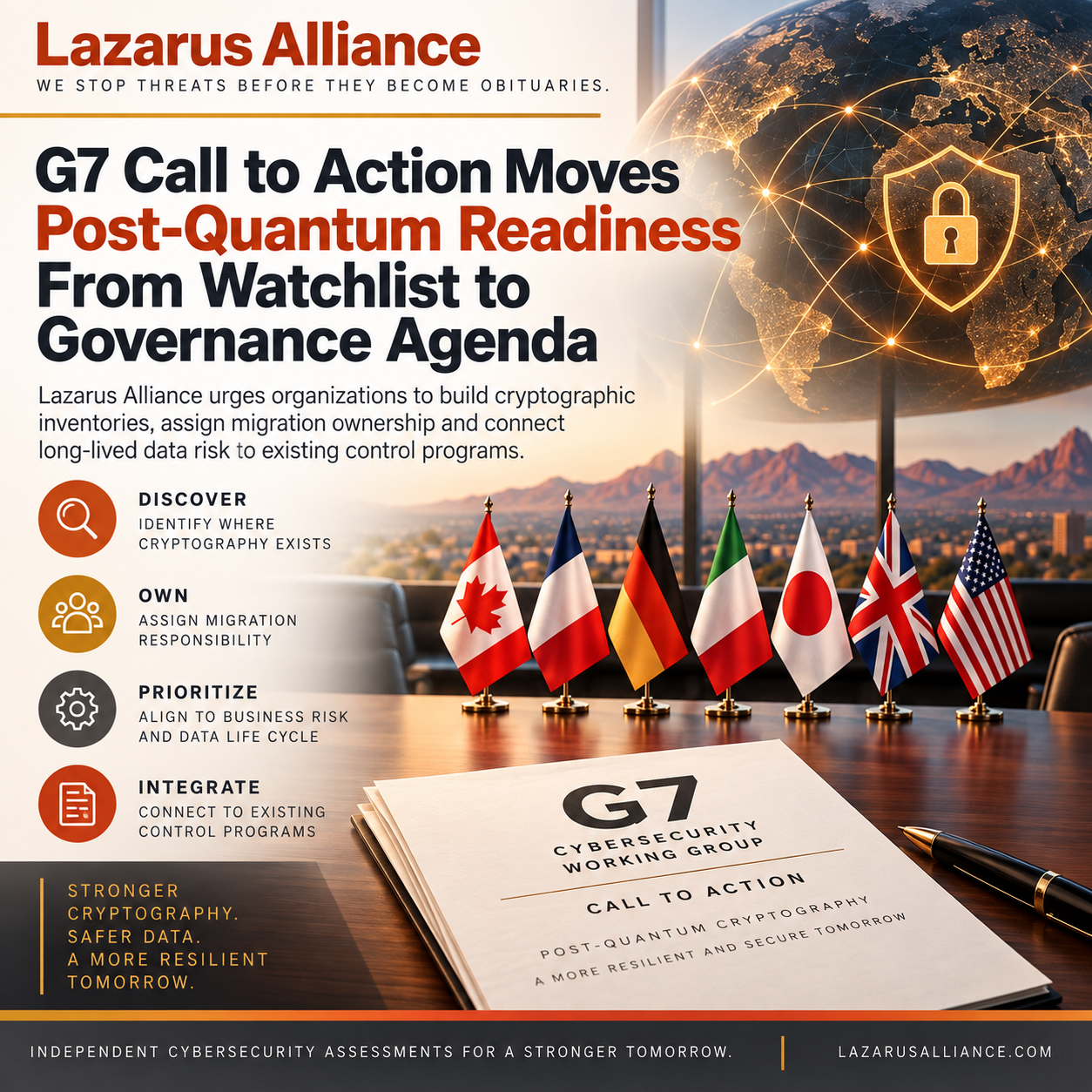
Lazarus Alliance G7 post-quantum readiness press release graphic highlighting cryptographic inventory, migration ownership, risk prioritization, and governance.
Lazarus Alliance urges organizations to build cryptographic inventories, assign migration ownership, connect long-lived data risk to existing control programs
The joint publication identifies a growing threat to widely used public-key cryptography and calls for coordinated action across public and private organizations. Independent reporting on the announcement emphasized the exposure created by “harvest now, decrypt later” activity, in which encrypted information is collected today for possible decryption in the future. The practical horizon therefore depends not only on when quantum capability arrives, but also on how long information must remain confidential.
A defensible readiness program starts with discovery. Organizations should identify cryptographic use across applications, infrastructure, certificates, identity systems, data exchanges and third-party services; classify assets by business criticality and confidentiality life; and document dependencies that may constrain migration. NIST has already published principal post-quantum standards, but implementation decisions still require architecture review, testing, change control and evidence that new configurations operate as intended.
Boards and risk committees should treat post-quantum transition as a governed portfolio rather than a one-time technology purchase. Clear ownership, risk acceptance criteria, supplier engagement, funding checkpoints and records of approved sequencing can help organizations connect a long-horizon technical issue to existing cybersecurity, privacy and compliance programs.
"The first useful post-quantum deliverable is not a purchase order; it is an evidence-backed map of where cryptography protects the organization’s most durable secrets and critical trust relationships. Once leaders can see those dependencies, they can prioritize migration, challenge vendor assumptions and make decisions that stand up to audit and board scrutiny." - Michael Peters, CEO & Founder, Lazarus Alliance
Lazarus Alliance helps organizations assess cybersecurity and privacy risk, strengthen policies and governance, map controls and evidence, and develop practical remediation roadmaps across complex regulatory environments. Through Cybervisor® advisory services, organizations can establish ownership, decision criteria and review cadence for multi-year security transformations, including post-quantum readiness.
The G7 call to action does not create a single universal compliance deadline. Organizations should evaluate applicable contractual, regulatory and sector-specific requirements with qualified counsel and relevant authorities while using current guidance to begin proportionate planning.
ABOUT LAZARUS ALLIANCE
Lazarus Alliance is a veteran-owned global provider of Proactive Cybersecurity®, specializing in cybersecurity audit and compliance, risk assessment and management, privacy audit and compliance, vulnerability and penetration testing, and IT policies and governance. Founded in 2000, the firm helps organizations attain, maintain, and demonstrate information security and compliance excellence across complex regulatory environments.
Lazarus Alliance is an authorized CMMC Third-Party Assessment Organization (C3PAO), an A2LA-accredited FedRAMP Third-Party Assessment Organization (3PAO), and a PCI DSS Qualified Security Assessor (QSA). Headquartered in Scottsdale, Arizona, Lazarus Alliance serves organizations ranging from startups to multinational enterprises with cybersecurity, privacy, risk, governance, and compliance expertise.
Michael Peters
Lazarus Alliance, Inc.
7628224174 ext.
email us here
Visit us on social media:
LinkedIn
YouTube
X
About Lazarus Alliance
Legal Disclaimer:
EIN Presswire provides this news content "as is" without warranty of any kind. We do not accept any responsibility or liability for the accuracy, content, images, videos, licenses, completeness, legality, or reliability of the information contained in this article. If you have any complaints or copyright issues related to this article, kindly contact the author above.
