

The most trusted news from Europe
Provided by AGP
YRC Expands Warehouse Consulting Practice as Data Shows Most Retail Warehouses Run 30-40% Below Operational Efficiency
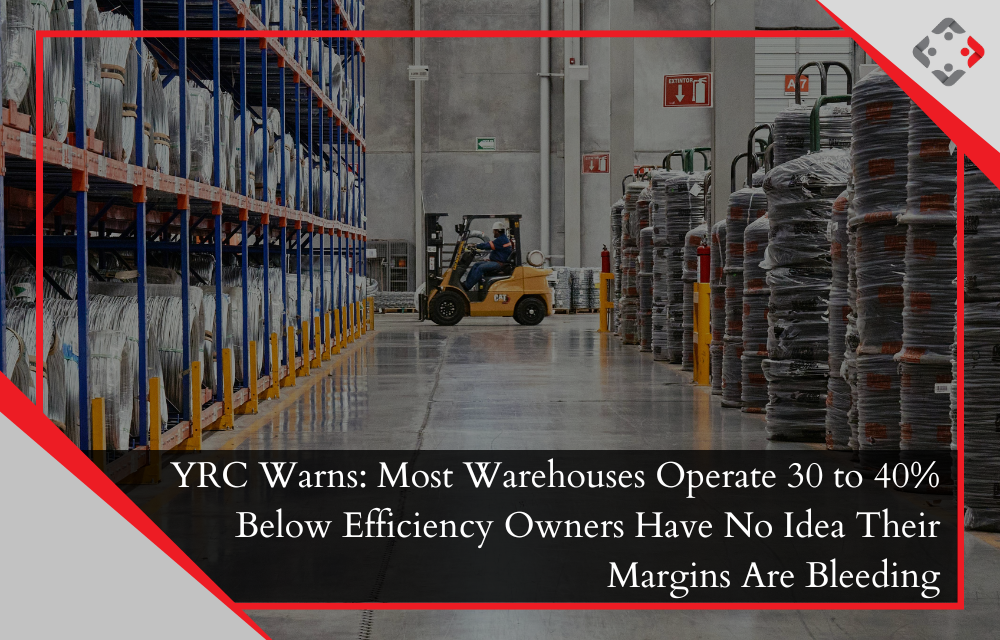
Specialist retail consulting firm launches structured audit and systems capability for retail, FMCG and D2C operators absorbing untracked supply chain losses
Many warehouse operators confuse familiarity with efficiency. As volumes grow, old layouts, processes, and staffing quietly underperform - until the losses become visible.”
PUNE, MAHARASHTRA, INDIA, May 6, 2026 /EINPresswire.com/ -- What if the warehouse that has operated without complaints for years is the single biggest drain on a retail business's margins?— Rupal, CSO at Your Retail Coach
Operational dysfunction rarely announces itself. Shrinkage accumulates, pick errors multiply, and labour overruns normalise until the cost damage has already compounded. YourRetailCoach (YRC), a specialist retail and eCommerce consulting firm with 500+ businesses advised across the globe, has expanded its 𝘄𝗮𝗿𝗲𝗵𝗼𝘂𝘀𝗲 𝗰𝗼𝗻𝘀𝘂𝗹𝘁𝗶𝗻𝗴 practice to address the most underestimated cost driver across retail, FMCG, and 𝗗𝟮𝗖 𝘀𝘂𝗽𝗽𝗹𝘆 𝗰𝗵𝗮𝗶𝗻𝘀.
𝗧𝗛𝗘 𝗣𝗥𝗢𝗕𝗟𝗘𝗠 𝗖𝗢𝗦𝗧𝗦 𝗠𝗢𝗥𝗘 𝗧𝗛𝗔𝗡 𝗠𝗢𝗦𝗧 𝗥𝗘𝗧𝗔𝗜𝗟𝗘𝗥𝗦 𝗥𝗘𝗔𝗟𝗜𝗦𝗘
Warehousing inefficiency carries a measurable cost that most retail chains consistently fail to track. Warehouse operations account for up to 20% of total supply chain costs in retail environments. Research indicates that 30 to 40% of warehouse capacity sits underutilised across the sector at any given time. Mis-slotted inventory and unoptimised pick paths inflate operational payroll by 15 to 25% in facilities that have not undergone a systematic layout review. Order error rates in unstructured picking environments translate into return and restocking costs worth 2 to 4% of annual revenue.
These are not fringe incidents. They represent the predictable cost of scaling without warehouse systems, not the result of isolated mismanagement.
Get advise for Retail Business Consulting : https://www.yourretailcoach.in/contact/
𝗪𝗛𝗔𝗧 𝗬𝗥𝗖'𝗦 𝗪𝗔𝗥𝗘𝗛𝗢𝗨𝗦𝗘 𝗖𝗢𝗡𝗦𝗨𝗟𝗧𝗜𝗡𝗚 𝗣𝗥𝗔𝗖𝗧𝗜𝗖𝗘 𝗗𝗘𝗟𝗜𝗩𝗘𝗥𝗦
YRC's expanded practice operates as a modular framework, enabling retail chains to target specific operational dysfunction or pursue a full warehouse overhaul.
-> Warehouse Setup and Design: YRC audits and redesigns physical layouts against actual throughput data, with structured redesigns reducing pick times by up to 30%.
-> Retail Warehouse Management Systems: The practice utilizes warehouse management systems tailored to fit the retailer’s scale and product mix, thereby moving away from spreadsheet reliance and towards real-time visibility of stock.
-> Inventory Accuracy and Slotting: YRC uses speed information to change the standards used for slotting and improve the accuracy and degree of errors found during the cycle count process.
-> Standard Operating Procedures (SOPs): All processes from receiving and storing through to picking, packing, and shipping have been standardized to include an SOP, giving the operations team something to follow without any special skills required.
-> Warehouse Automation Consultancy: YRC evaluates the need for automation in each existing facility, determining which areas yield measurable financial gains through technology implementation, and which add unnecessary expenses without commensurate operational benefits.
-> Labour Productivity Methodologies: Performance metrics are established based on defined benchmarks, enabling retailers to realize between 10 and 20 percent labour productivity improvements in the first cycle following system deployment.
-> Common Standards for Multi-Site Warehouses: When several warehouse sites exist for retailers, YRC works toward setting up common standards that ensure the security of margin consistency beyond geography.
Get advise for Retail Business Consulting : https://www.yourretailcoach.in/contact/
𝗧𝗛𝗘 𝗪𝗜𝗡𝗗𝗢𝗪 𝗧𝗛𝗔𝗧 𝗥𝗘𝗙𝗨𝗦𝗘𝗦 𝗧𝗢 𝗦𝗧𝗔𝗬 𝗢𝗣𝗘𝗡
Pressure on global supply chains continues to grow, and the retailers that stand to excel during the coming growth period are those who view their warehouses as tools instead of overheads.
Those retailers that engage YRC for a warehouse assessment will emerge into the next cycle with improved efficiency, increased fill rates, and a scalable framework of systems in place. Retailers delaying the process risk continuing to absorb inefficiencies that will only multiply with each additional SKU and warehouse site.
𝗔𝗯𝗼𝘂𝘁 𝗬𝗼𝘂𝗿𝗥𝗲𝘁𝗮𝗶𝗹𝗖𝗼𝗮𝗰𝗵 (𝗬𝗥𝗖)
YourRetailCoach (YRC) is a specialist 𝗿𝗲𝘁𝗮𝗶𝗹 𝗮𝗻𝗱 𝗲𝗖𝗼𝗺𝗺𝗲𝗿𝗰𝗲 𝗰𝗼𝗻𝘀𝘂𝗹𝘁𝗶𝗻𝗴 𝗳𝗶𝗿𝗺 with offices in Dubai, Pune, and Nigeria, having advised 500+ businesses across global markets on store design, SOPs, inventory management, HR systems, ERP implementation, franchise development, and warehouse operations. The firm's work begins on the shop floor and scales through every layer of the retail operation.
Get advise for Retail Business Consulting : https://www.yourretailcoach.in/contact/
Rupal Nikhil Agarwal
TechMediaMath
+91 98604 26700
support@mindamend.net
Visit us on social media:
LinkedIn
Facebook
YouTube
X
Warehouse SOPs Explained: Optimize Operations & Improve Productivity
Legal Disclaimer:
EIN Presswire provides this news content "as is" without warranty of any kind. We do not accept any responsibility or liability for the accuracy, content, images, videos, licenses, completeness, legality, or reliability of the information contained in this article. If you have any complaints or copyright issues related to this article, kindly contact the author above.
