

From SEO to AI Search Optimization, Why Visibility has changed forever.
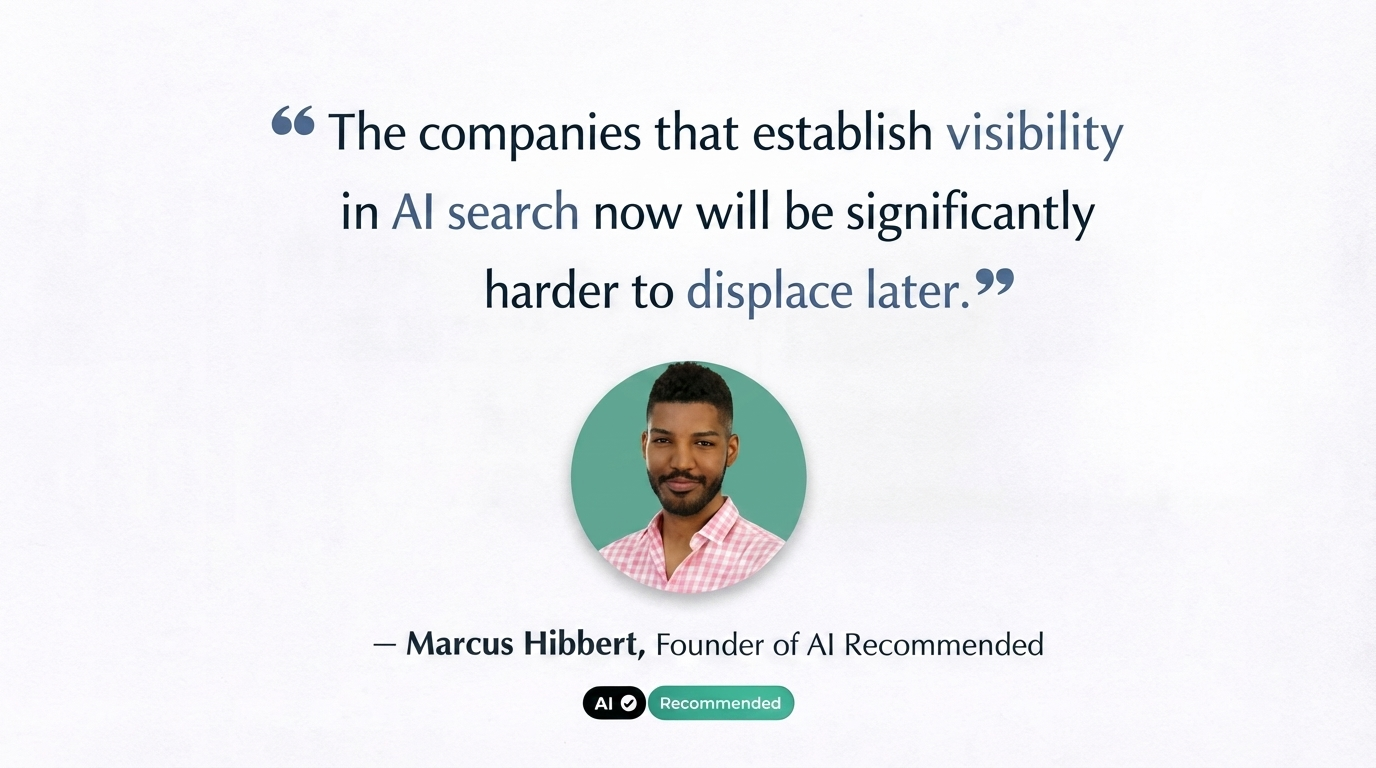
Marcus Hibbert, Founder of AI Recommended, highlights the long-term strategic advantage of establishing brand visibility within AI search models early.
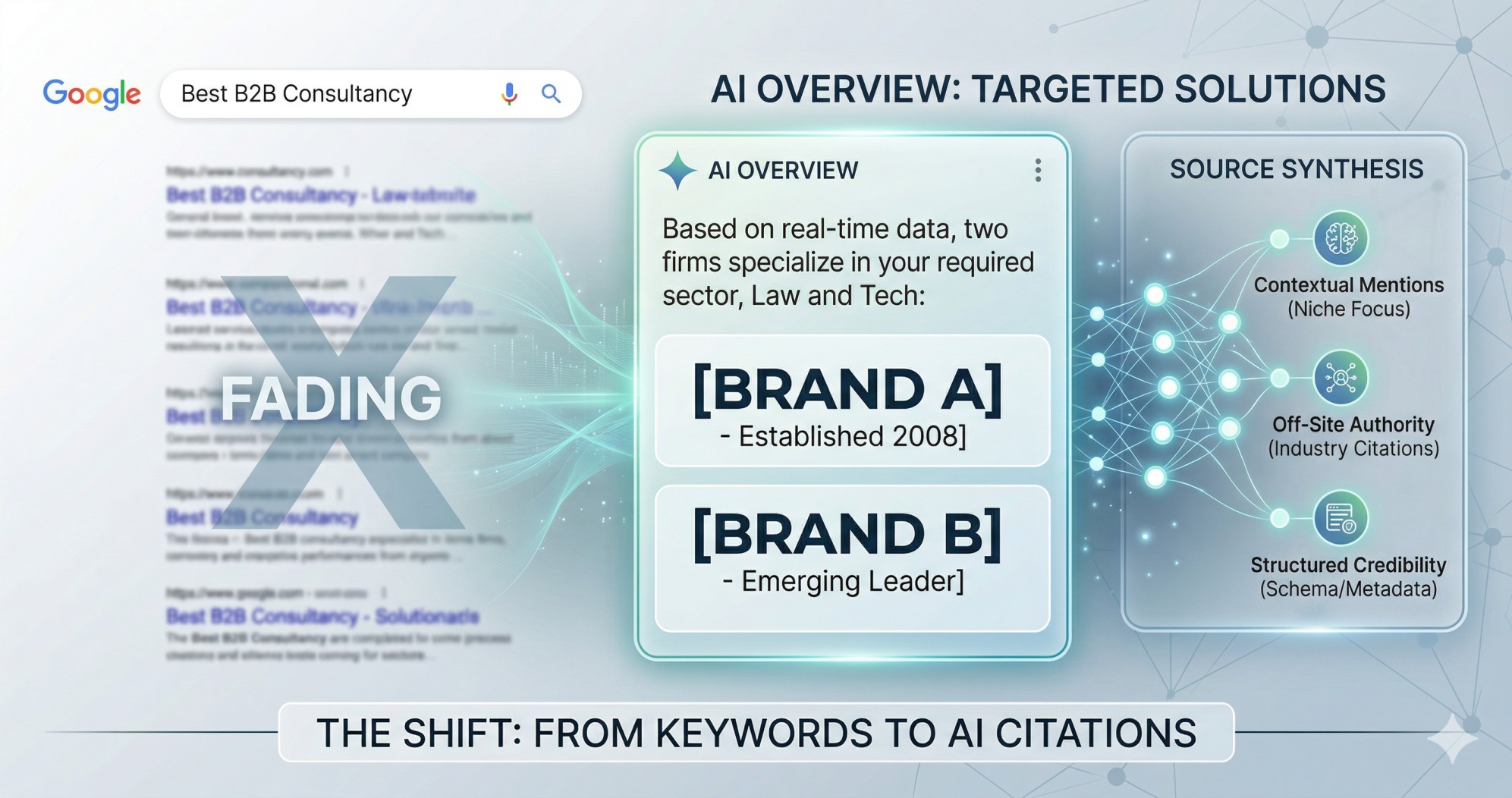
Traditional search results are a fading concept. This illustration shows the shift towards AI-synthesized recommendations, where data signals like off-site authority and contextual mentions are now crucial for B2B brand visibility.
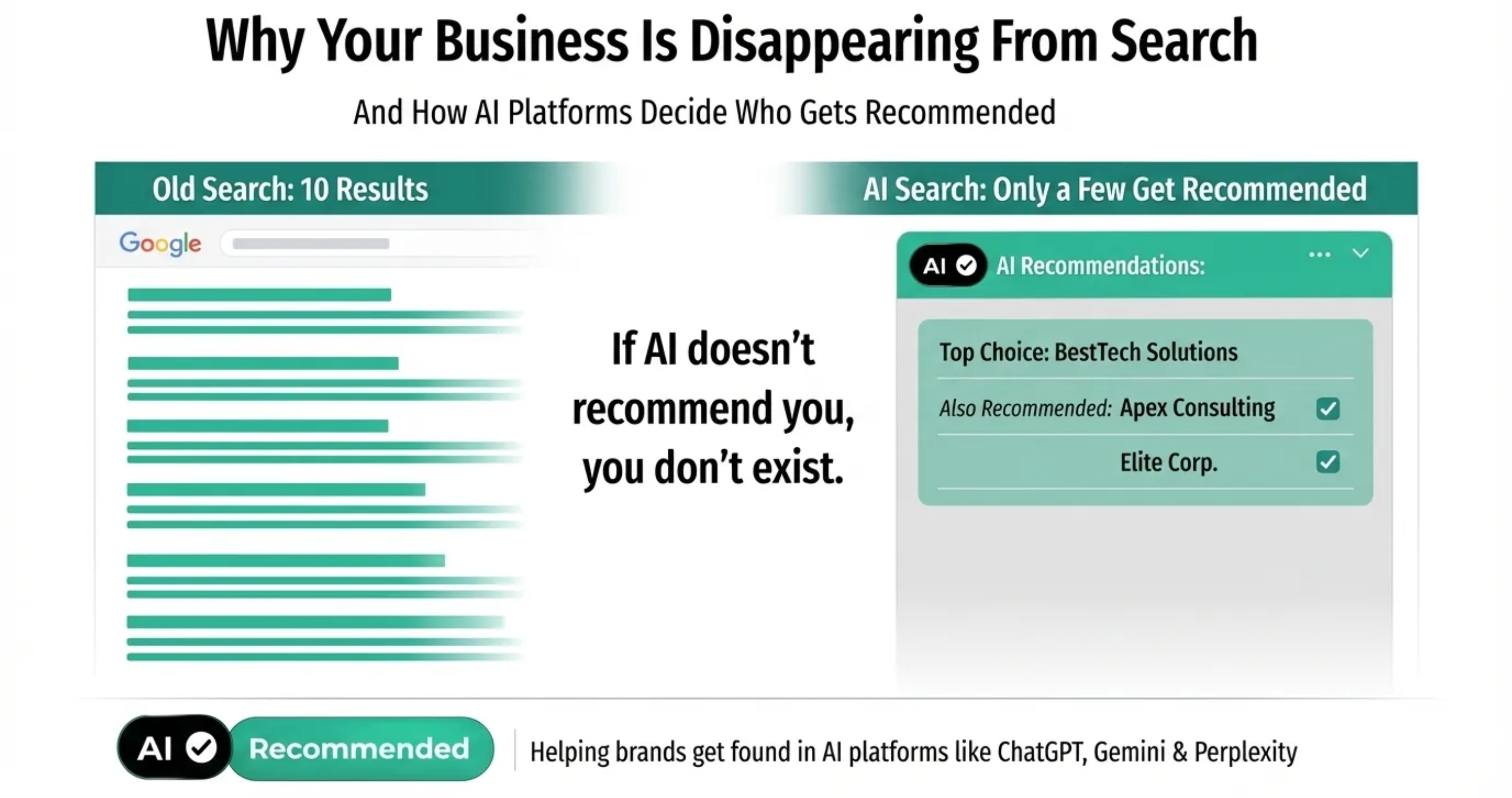
Digital visibility is changing. This comparison shows the move from a crowded list of results to a select few AI recommendations, where being the preferred choice is the only way to remain visible to modern buyers.
B2B buyers shift from Google to AI platforms, AI Recommended launches GEO strategies to ensure brands are cited and recommended by leading generative engines.
Search Has Changed: From Keywords to AI Answers For two decades, digital visibility followed a clear pattern. A buyer had a question, typed it into Google, and scrolled through a list of results. Brands competed for position. Being closer to the top meant being closer to the customer. That model is no longer the norm.
Today, buyers—especially in high-consideration B2B categories like law, finance, accounting, and technology—are more frequently skipping keyword searches altogether. They open ChatGPT and ask which consultancy to hire. They use Perplexity for vendor comparisons. They read synthesized answers from Google AI Overviews instead of clicking on ten blue links.
According to a March 2026 analysis of 680 million AI citations, 73% of B2B buyers now use AI tools like ChatGPT and Perplexity as part of their purchase research process. This is no longer a fringe behaviour; it has become a mainstream step in the buying journey.
If AI Doesn't Recommend a Brand, That Brand Doesn't Exist Here is where the stakes diverge sharply from traditional search. Google returned ten results per page. A brand at position six still had a chance of being seen. AI platforms do not operate that way. When a buyer asks an AI which vendor to use, they receive a synthesized recommendation—typically naming two or three brands. There is no page two. There is no position seven.
The overlap between Google’s top ten results and AI citation sources has dropped from 76% to just 38% in six months. Two out of three AI citations now come from sources that never appear on Google’s first page. A brand can hold the number one organic position on Google and remain entirely absent from AI recommendations. Despite this, only 22% of marketers currently track AI visibility. The gap between where buyers are looking and where brands are optimizing has never been wider.
Why Traditional SEO Is No Longer Enough Traditional SEO is a ranking game. It rewards keyword relevance, backlink volume, and technical performance. AI Search Optimization, however, operates on different criteria. Large language models do not rank pages—they build understanding. They evaluate entities, not URLs.
A brand can have excellent on-page SEO and still be invisible to an AI platform because its expertise has not been established across the broader digital ecosystem. The signals AI uses to determine trustworthiness are categorically different from the signals that determine Google rankings.
The Rise of Generative Engine Optimization (GEO) A new discipline is emerging to close this gap. AI Search Optimization—also called Generative Engine Optimization (GEO) or Answer Engine Optimization (AEO)—is the practice of optimizing a brand’s digital presence for AI recommendations.
Where traditional SEO focuses on crawlers, GEO focuses on the language models and retrieval systems that decide what appears in conversational AI responses. The results are significantly better. AI search traffic converts at 14.2% compared to Google organic's 2.8%. This 5.1 times advantage exists because buyers who come through AI recommendations usually finish most of their research before reaching out.
What AI Looks for Before Recommending a Brand Patterns emerging from LLM citation research reveal four consistent signals that influence recommendations:
1. Entity Clarity: AI platforms must clearly understand what a brand does and who it serves. Ambiguity creates confusion in how models retrieve a business.
2. Off-site Authority: Being cited by credible third-party sources signals to AI systems that a brand is recognized beyond its own website.
3. Contextual Mentions: A brand that appears consistently in content related to its niche develops a stronger association with the problems it solves.
4. Structured Credibility: Schema markup and content structured for AI interpretation contribute to how confidently a model cites a brand.
Inside the Shift: Marcus Hibbert, Founder of AI Recommended, has been studying large language model behavior since 2023. With a background in digital visibility that goes back to 2008, Hibbert saw the structural change early. He established AI Recommended in 2025 to help businesses understand this new way of brand discovery.
"AI platforms are forming opinions about brands right now, based on the digital signals that exist today," says Hibbert. "The companies that build AI search visibility in this early window will be significantly harder to displace later."
The effects of the transition are clear. Organic search traffic is dropping as AI manages informational queries directly. At the same time, customers with clear intent are doing their research within AI platforms and reaching out only to the suggested brands. For companies that are not yet noticeable in AI search, this means relying more on costly outbound efforts.
The opportunity is there, but it won't last forever. Brands that build their visibility in AI now are creating long-term benefits. For businesses that want to see where they fit in, AI Recommended provides specialized consultations to help close the visibility gap.
About AI Recommended: AI Recommended is a Generative Engine Optimization (GEO) agency that helps B2B brands get AI visibility and be recommended on major AI platforms like ChatGPT, Gemini, and Perplexity. Marcus Hibbert started the agency, which works with clients in the US and UK in law, accounting, finance, and technology.
Marcus Hibbert
AI Recommended
+44 7908 116915
info@airecommended.com
Visit us on social media:
LinkedIn
Legal Disclaimer:
EIN Presswire provides this news content "as is" without warranty of any kind. We do not accept any responsibility or liability for the accuracy, content, images, videos, licenses, completeness, legality, or reliability of the information contained in this article. If you have any complaints or copyright issues related to this article, kindly contact the author above.
