

PUMBAA Unveils Mass-Production Methodology for High-Performance 30,000 RPM Motors Featuring 1000 MPa Rotors
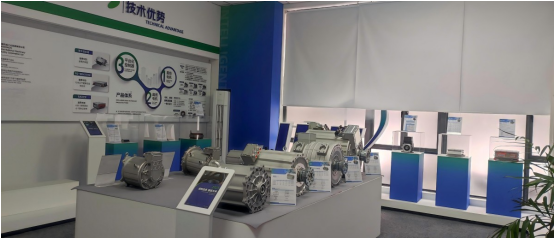
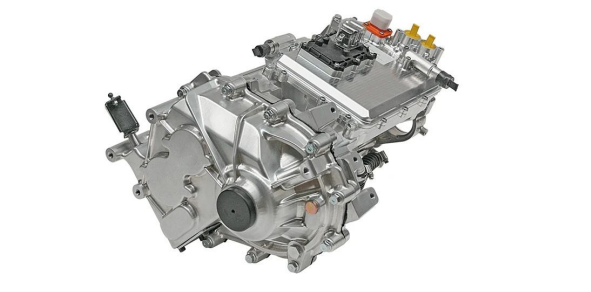
The mass production of 30,000 rpm motors represents a collaborative leap across materials science, electromagnetic design, thermal management, precision manufacturing, and control algorithms. PUMBAA has systematically redefined the boundaries of high-performance electric drive technology through the implementation of double-layer U-shaped magnet topology, 10-layer unequal-pitch hairpin windings, and in-house developed 1500V Silicon Carbide (SiC) electronics.
The Engineering Value of High-Speed Propulsion
As user demand for high-speed operation and sustained performance increases, traditional automotive motors often encounter a power "inflection point" near 6,000 rpm. In these scenarios, torque tends to decay in the constant power region, which can affect acceleration at higher speeds.
By defining and developing a 30,000 rpm-class electric drive unit, PUMBAA addresses these performance requirements while optimizing material usage. From a systems engineering perspective, increasing motor speed from the typical 12,000 rpm to 30,000 rpm allows for a substantial reduction in active motor materials, including copper, rare-earth magnets, and silicon steel. Research indicates that doubling rotational speed can reduce iron core material usage by approximately 40%, facilitating the optimization of volume, weight, and cost for commercial electric vehicle platforms.
Rotor System: Addressing Five Core Engineering Challenges
The rotor is a critical subsystem in high-speed motor design. At 30,000 rpm, the centrifugal acceleration at the rotor's outer edge exceeds 40,000 g. Ensuring reliability under these conditions requires specific technical breakthroughs:
Material Strength: Traditional rotor laminations typically use non-oriented electrical steel with a yield strength of about 450 MPa. To sustain speeds of 30,000 rpm, PUMBAA utilizes High-Strength Electrical Steel (HS-ECS), increasing tensile strength to ≥1000 MPa.
Precision Manufacturing: The implementation of laser welding for lamination stacking enhances interlayer bonding force. Precision outer diameter grinding achieves a tolerance of ±3 μm, ensuring the necessary rotor roundness for high-speed stability.
Magnet Fixation: To prevent magnet detachment under intense centrifugal impact, a high-expansion rate adhesive coating is used. This material expands over five times upon curing, creating a uniform interface that improves stress distribution compared to traditional spot bonding.
Topology Optimization: The company employs a "Double-Layer U-Shaped" Interior Permanent Magnet (IPM) topology. This design maximizes the reluctance difference to boost peak torque by approximately 10% without additional magnet material. It also disperses mechanical stress into multiple independent units, preventing monolithic cracking.
Dynamic Balancing: At 30,000 rpm, even minimal unbalance generates significant centrifugal force. The production process suppresses residual unbalance to ≤50 mg, a 67% reduction from typical industry levels.
Stator and Thermal Management Innovations
At 30,000 rpm, the electrical frequency reaches 500 Hz, necessitating advanced solutions to manage high-frequency losses and heat.
Hairpin Windings: The drive systems utilize 10-layer unequal-pitch hairpin windings. With a copper fill factor exceeding 60%, this design controls the AC/DC copper loss ratio to approximately 1.15. The unequal-pitch configuration optimizes the flow cross-section for cooling oil, ensuring efficient thermal dissipation.
Core Materials: To reduce high-frequency iron losses, ultra-thin electrical steel with a thickness of ≤0.2 mm is employed. Compared to traditional 0.35 mm steel, this reduces core losses at 500 Hz by 40-50%.
Direct Oil Cooling: PUMBAA integrates cooling oil passages directly inside the stator slots. This allows the oil to maintain direct contact with the copper windings. Measurements indicate that steady-state winding temperature differences can be controlled within 5°C, with peak temperatures reduced by approximately 40°C compared to traditional jacket cooling.
Control Systems and Power Electronics
The efficiency of high-speed motors is inherently dependent on control logic and power devices. The inclusion of in-house developed 1500V SiC chips provides a critical breakthrough. Compared to traditional IGBTs, SiC MOSFETs support higher switching frequencies and offer lower switching losses. The 1500V rating also provides a safety margin for 800V platforms and future high-voltage developments.
Control algorithms are deeply matched with the motor hardware to ensure stable operation in the high-speed field-weakening region, maintaining optimal efficiency throughout the vehicle's duty cycle.
Noise, Vibration, and Harshness (NVH) Control
With the lower background noise of electric vehicles, motor harmonics become more perceptible. PUMBAA utilizes a triple NVH control strategy:
Electromagnetic Optimization: Minimizing electromagnetic force harmonics through multi-objective optimization of slot shapes and skew angles.
Structural Reinforcement: Enhancing housing stiffness to shift resonance frequencies away from operational bands.
High-Precision Balancing: Ensuring vibration acceleration remains below 0.1 g through lifecycle-stabilized dynamic balancing.
Future Evolution and Technical Pathways
The mass production of 30,000 rpm motors marks the beginning of a new technological cycle in the electric vehicle industry. Looking forward, PUMBAA is exploring several evolutionary paths:
New Materials: Investigation into amorphous and nanocrystalline soft magnetic materials to further reduce core losses.
Integrated Thermal Management: Sharing cooling infrastructure between the stator and inverter modules to reduce thermal resistance and simplify system architecture.
AI-Driven Design: Utilizing multi-physics co-simulation coupled with AI algorithms to compress development cycles for customized solutions.
PUMBAA remains committed to delivering high-performance EV powertrain drive systems that meet the evolving needs of global customers. Through a focus on quality and engineering flexibility, the company continues to support the industry's transition toward a sustainable and efficient future.
About PUMBAA Co., Ltd.
PUMBAA Co., Ltd. is a provider of high-efficiency electric vehicle drive systems. The company designs and manufactures permanent magnet synchronous motors (PMSM), motor controllers (MCU), vehicle control units (VCU), and power supply systems, including DCDC, DCAC, OBC, and PDU. Tailored for a wide array of commercial electric vehicles, Pumbaa offers both off-the-shelf industry-standard products and customized solutions. With a team of engineers dedicated to electric vehicle technology, the company prioritizes quality and post-purchase support for customers worldwide.
For more information on high-performance EV powertrain drive systems, please visit the official website: https://www.pumbaaevmotor.com/
Pumbaa E-Drive Technology Co., Ltd.
Pumbaa E-Drive Technology Co., Ltd.
+86 15084893098
support@pumbaaev.com
Legal Disclaimer:
EIN Presswire provides this news content "as is" without warranty of any kind. We do not accept any responsibility or liability for the accuracy, content, images, videos, licenses, completeness, legality, or reliability of the information contained in this article. If you have any complaints or copyright issues related to this article, kindly contact the author above.
